
BOOKS
Three Decades of Writing on the Mind, Learning, and Communication
Stephen Kosslyn has authored sixteen books and edited fourteen more. The authored books are grouped below into four areas: mental imagery and the brain, the science of learning and AI in education, visual communication, and psychology textbooks.
Mental imagery and the brain
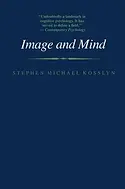
1980
Image and Mind
This book reports 10 years of work on a simple question: "What shape are a German Shepherd dog's ears?" I was not interested in the answer itself, but rather in the ways that people go about trying to answer questions like this when the object is not actually in front of them. Usually, people report that they visualize and "look" with the mind's eye. But what does this mean? There is no light up there, and no inner eye to "see" a picture. Drawing on behavioral experiments and computational modeling in mental rotation, scanning, and image size, I argued that mental images are genuinely depictive, quasi-pictorial representations rather than reducible to language-like propositions. The book introduced an early computational model of imagery and set the terms for what came to be called the "imagery debate" with Zenon Pylyshyn and others, establishing imagery as a legitimate and tractable topic in cognitive science.
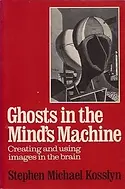
1983
Ghosts in the Mind's Machine
A more accessible follow-up aimed at a broader readership, this book translates the experimental imagery research program into plain language. It explores how the mind generates, maintains, "inspects," and transforms mental images, weaving demonstrations and thought experiments together with summaries of laboratory findings. It serves as a popular companion to Image and Mind, and shows general readers why mental imagery matters for perception, memory, problem solving, and creativity.
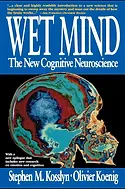
1992/1995
Wet Mind: The New Cognitive Neuroscience
An early textbook for the then-emerging field of cognitive neuroscience. The "wet mind" framing argues against treating cognition as software running on irrelevant hardware: brain biology shapes the structure of mental computation. The book systematically covers perception, attention, memory, language, and reasoning by linking psychological functions to neural systems, and was among the first major texts to integrate the two disciplines for advanced students.
with Olivier Koenig
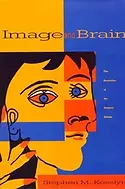
1994
Image and Brain: The Resolution of the Imagery Debate
This book is a direct successor to Image and Mind, bringing neuroimaging, neuropsychology, neurophysiology, and computational modeling to bear on the question of whether images are depictive, or "picture-like." Marshaling evidence that visual mental imagery shares neural machinery with visual perception, including early visual cortex, it argues that the imagery debate is empirically resolvable rather than merely philosophical. The book consolidated the depictive view and remains a highly cited work in the field.

2006
The Case for Mental Imagery
A focused scholarly book revisiting and updating the case for depictive mental representations in light of a decade of new neuroimaging and patient-study evidence. The book directly engages skeptics' arguments and reviews findings on the role of topographically organized visual cortex in imagery as well as many other findings about the brain's structure and function.
with William L. Thompson and Giorgio Ganis
2013
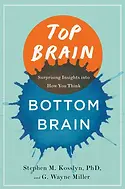
Top Brain/Bottom Brain: Surprising Insights Into How You Think
A trade book proposing a "theory of cognitive modes" based on the relative reliance people place on top-brain, planning and action, and bottom-brain, perception and classification, systems. The book argues for four broad cognitive modes that combine high or low use of each system, with implications for personal style, work, and relationships.
with G. Wayne Miller
The science of learning and AI in education
.webp)
2020
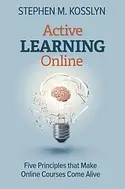
Active Learning Online: Five Principles That Make Online Courses Come Alive
Arising in large part from my experience designing Minerva's pedagogy, this book lays out five evidence-based principles from the science of learning, such as deep processing, deliberate practice, and chunking, applied specifically to online instruction. It offers concrete techniques for making remote courses genuinely engaging and effective rather than passive video delivery, and was timely amid the pandemic-era shift online.

2023
Active Learning with AI: A Practical Guide
This volume addresses how generative AI tools can be used in service of active-learning principles rather than as shortcuts that undermine them. The book gives practical guidance to instructors and course designers on integrating AI for personalization, formative feedback, scaffolding, and assessment, while preserving the cognitive engagement that makes learning durable.
2024
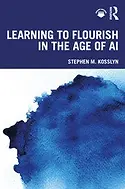
Learning to Flourish in the Age of AI
This book considers which human capabilities matter most as AI takes on more cognitive work. I argue for cultivating durable skills, such as critical thinking, creative problem-solving, communication, and self-management, that complement rather than compete with AI, and explore how education must change to develop them. The book reflects the pedagogical vision behind Active Learning Sciences and frames an agenda for K-12 and higher education in the AI era.
Visual communication
1994
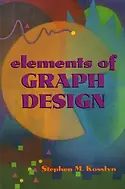
Elements of Graph Design
This is a practitioner-oriented book that applies perception and cognition research to the design of charts and graphs. I distilled principles for line graphs, bar graphs, scatterplots, and other formats based on how viewers actually extract information visually, identifying common pitfalls that mislead readers. It became an influential reference for anyone presenting quantitative data, and laid the groundwork for the expanded 2006 treatment.
2006
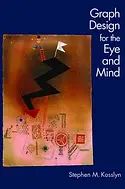
Graph Design for the Eye and Mind
A substantial expansion and reframing of the 1994 graph-design book, this volume grounds design recommendations in eight psychological principles drawn from perception and cognition, such as relevance, appropriate knowledge, and salience. It works through chart types systematically, showing why specific design choices help or hurt comprehension, and offers a principled framework rather than a style guide.
2007
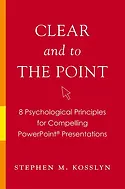
Clear and to the Point: 8 Psychological Principles for Compelling PowerPoint Presentations
A short, practical book applying cognitive and perceptual research to slide design. I identified eight principles, relating to perceptual organization, memory limits, and audience knowledge, that explain why so many presentations fail and how to fix them. It was intended as a guide for academics, businesspeople, and educators, translating cognitive science into actionable design advice.
2011
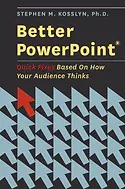
Better PowerPoint: Quick Fixes Based on How Your Audience Thinks
A compact, problem-oriented follow-up to Clear and to the Point, organized as a set of quick diagnostic fixes for common slide-design problems. Each section identifies a frequent mistake, explains the cognitive or perceptual reason it fails, and gives a concrete remedy, making it usable as a reference one can consult right before a talk.
Psychology textbooks
.webp)
2001
Psychology: The Brain, the Person, the World
A comprehensive introductory psychology textbook organized around three levels of analysis: brain, person, and group. This three-level framework gave the book a distinctive integrative structure, helping students see how phenomena like memory, emotion, and behavior require explanation at multiple linked levels rather than within isolated subfields.
with Robin S. Rosenberg

2002
Fundamentals of Psychology: The Brain, the Person, the World
A shorter, more focused version of the larger introductory psychology text, designed for one-semester courses or instructors wanting a leaner book. It preserves the three-level brain/person/world framework while trimming coverage to the essentials, making the integrative approach accessible to a wider range of courses and student audiences.
with Robin S. Rosenberg
2006
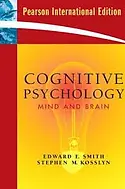
Cognitive Psychology: Mind and Brain
An advanced textbook co-authored with Edward Smith and others that integrates classical cognitive psychology with cognitive neuroscience. Covering perception, attention, memory, language, reasoning, decision-making, and emotion, the book consistently pairs behavioral findings with neural evidence, reflecting the field's shift toward brain-grounded explanations of mental processes.
with Edward E. Smith
2010
Abnormal Psychology: A Neuropsychosocial Approach
A textbook for abnormal psychology courses that extends the three-level framework to psychopathology, integrating neural, psychological, and social factors as interacting contributors to mental disorders. The "neuropsychosocial" framing argues that no single level adequately explains conditions like depression, anxiety, or schizophrenia, and the book systematically covers DSM categories through that lens.
with Robin S. Rosenberg
MULTIPLE EDITIONS, MOST RECENT 2025
Introducing Psychology: Brain, Person, Group
The shorter introductory text in the Brain, Person, World family, now in its sixth edition. Used at universities across the United States.
Edited books and special issues
In addition to the sixteen authored books above, Stephen has edited fourteen volumes and special issues across his career. The full list of edited books appears in his CV.